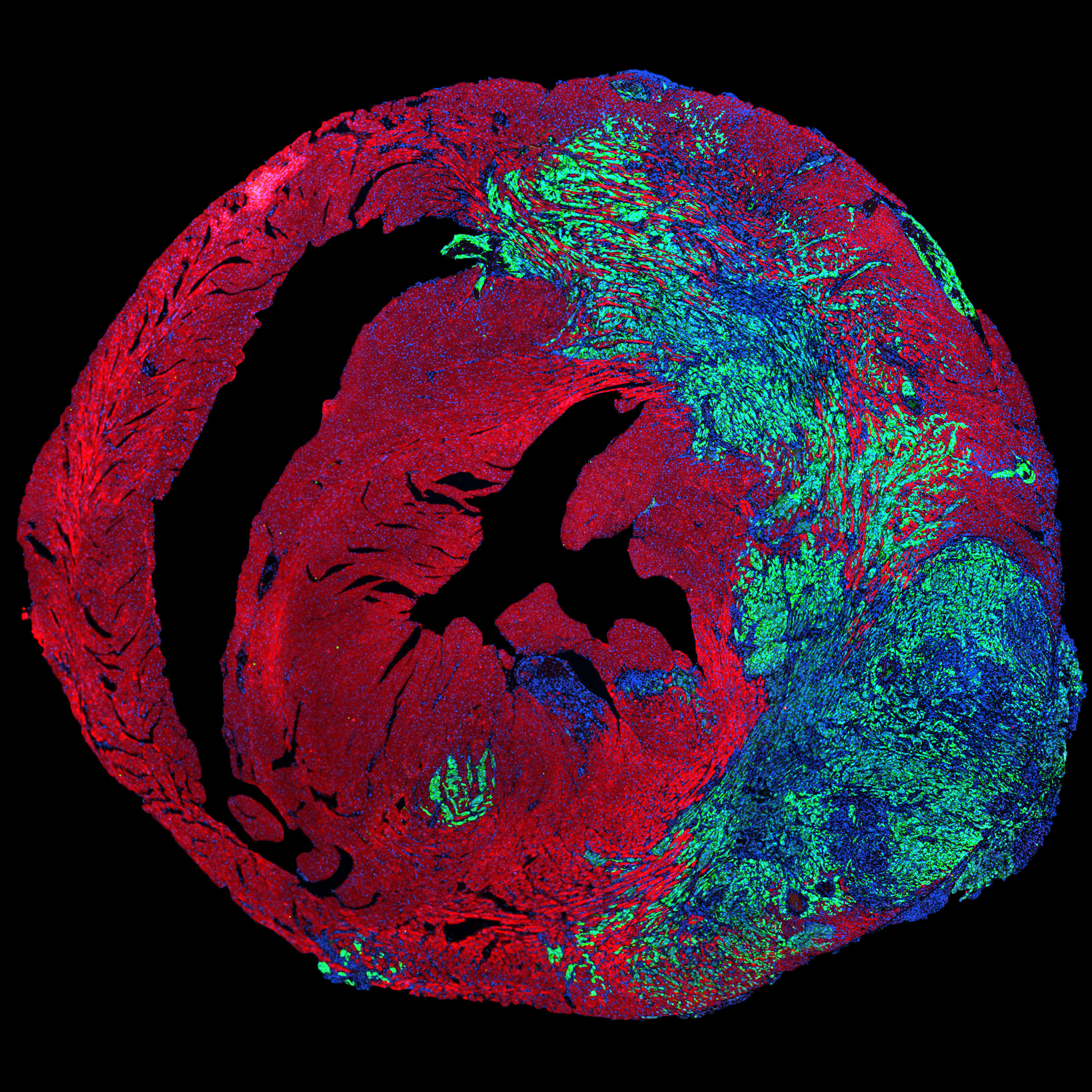
For years, Prof. Serena Zacchigna has worked to make hearts heal, not to cure cancer. Her team in Trieste had been working at the question as to why the muscle cells of an adult heart stop dividing, so the organ cannot repair itself after a heart attack. That question led somewhere no one expected.
“For years, we had been studying cardiac regeneration and asking why adult cardiomyocytes stop proliferating,” she told nexxahealth. “This led us to look at the mechanical load (the physical force, stress, or pressure applied to a biological mechanical system), as we, and others, observed that unloading the heart can reactivate cell proliferation. At some point we asked a very simple question: if mechanical load inhibits proliferation during regeneration, could it also inhibit proliferation in cancer? This connection between regeneration and cancer was probably the conceptual step that allowed us to see something that had been in front of us all along.”
The hunch was a fit for a fact that every pathologist knows, yet few can explain. The heart, one of the busiest organs in the body, almost never develops a tumour, and the cancer that spreads there from elsewhere tends to grow far more slowly than it does in the lungs, the liver or the bones. In April 2026, in the journal Science, Prof. Zacchigna’s team and a European network of collaborators reported why: the heart’s constant motion is itself a form of protection.